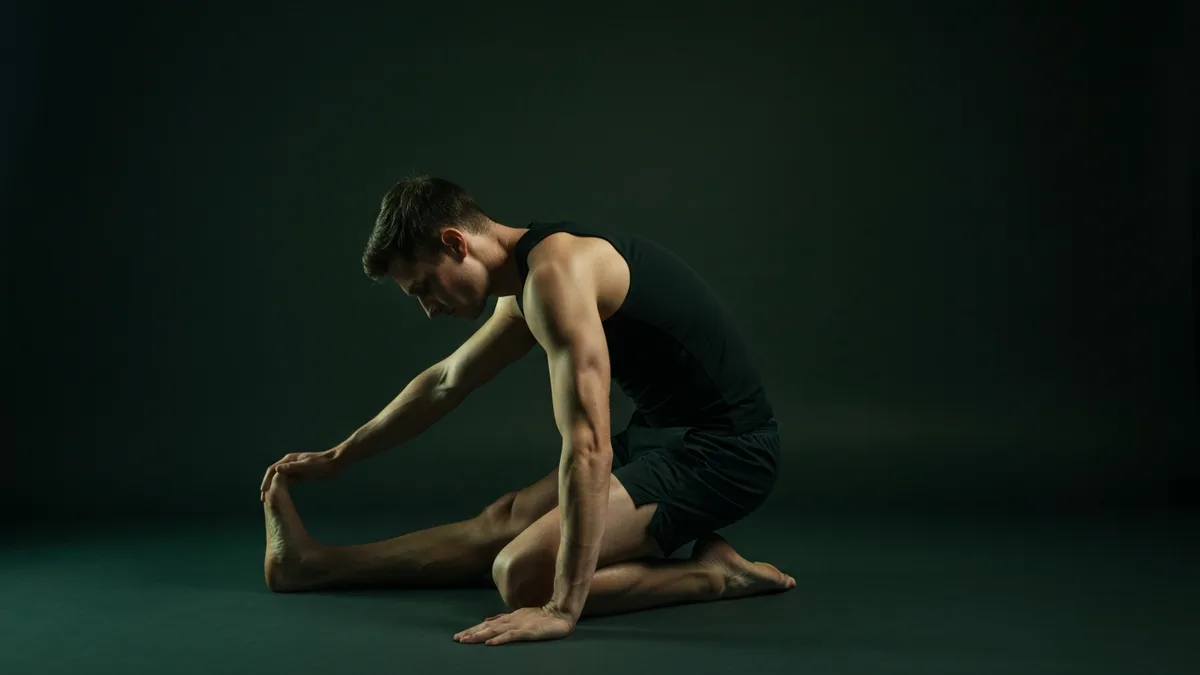
The popping sound when stretching your back is caused by gas bubbles (primarily carbon dioxide) releasing from the synovial fluid in the facet joints. This process, called tribonucleation, occurs when a joint is stretched beyond its resting position, creating a temporary low-pressure zone that allows dissolved gas to form and collapse as a bubble. It is normal, harmless, and does not cause arthritis or joint damage.
What Causes the Pop
Every spinal segment has a pair of facet joints — small synovial joints on the posterior aspect of the vertebrae that guide and limit spinal movement. These joints are filled with synovial fluid that lubricates the joint surfaces and contains dissolved gases (carbon dioxide, nitrogen, oxygen).
When you stretch, twist, or extend your back, the facet joint surfaces separate slightly. This separation reduces the pressure inside the joint capsule, causing dissolved gas to rapidly form a bubble. The formation and collapse of this bubble produces the audible pop. After the pop, it typically takes 20-30 minutes for the gas to redissolve into the synovial fluid — which is why you cannot immediately re-crack the same joint.
Other Sounds and What They Mean
Not all back sounds are facet joint pops. Understanding the difference helps identify when a sound is benign and when it warrants attention.
Single loud pop: Almost always gas bubble release from a facet joint. Normal and harmless.
Grinding or grating (crepitus): A continuous sound during movement rather than a single pop. This can indicate rough cartilage surfaces in the facet joints — common with age and usually not painful by itself. If accompanied by pain, medical evaluation is appropriate.
Clicking with movement: A repetitive click that occurs with specific movements (like rotating the thoracic spine) may indicate a tendon or ligament snapping over a bony prominence. Usually benign but worth monitoring if it develops alongside pain.
Pop with sudden sharp pain: A pop accompanied by immediate, sharp pain — especially during lifting or forceful movement — may indicate a muscle strain, ligament sprain, or disc injury. This is different from the painless popping that occurs during gentle stretching and warrants assessment.
Is It Safe to Crack Your Back?
Self-cracking through gentle stretching and rotation is safe for the vast majority of people. The forces involved in a self-stretch are well within the tolerable range for spinal joints. Problems arise only when excessive force is applied — having someone stand on your back, forceful twisting beyond your natural range, or using body weight to force a joint past its end-range.
The relief that follows a back crack is real. When the gas bubble releases, the joint capsule stretches slightly, which stimulates mechanoreceptors that temporarily reduce the perception of stiffness and pain. Additionally, the stretch itself activates the Golgi tendon organs in the surrounding muscles, producing a reflex relaxation response.
Habitual Cracking
Some people develop a habit of cracking their back throughout the day. While this is not dangerous, the need for frequent cracking often indicates underlying thoracic stiffness that would be better addressed through mobility work.
The cycle works like this: the thoracic spine stiffens from sustained posture, gas accumulates in the restricted facet joints, the person cracks the joints for temporary relief, the stiffness returns within hours, and the cycle repeats. Breaking the cycle requires addressing the stiffness directly through foam roller thoracic mobilization, rotation stretches, and the postural endurance work that prevents the stiffness from returning.
When to Seek Evaluation
The vast majority of back popping is completely benign. Seek medical evaluation if popping is consistently accompanied by pain (not just the satisfying "release" sensation), new popping develops after an injury or trauma, popping is accompanied by neurological symptoms (tingling, numbness, weakness), or the popping is accompanied by visible swelling or deformity in the spinal region.
For the stretching routines that reduce the stiffness driving habitual cracking, see our mid-back stretches and foam roller stretches. For the connection between back stiffness and postural weakness, our lifestyle guide explains why the muscles stiffen in the first place.