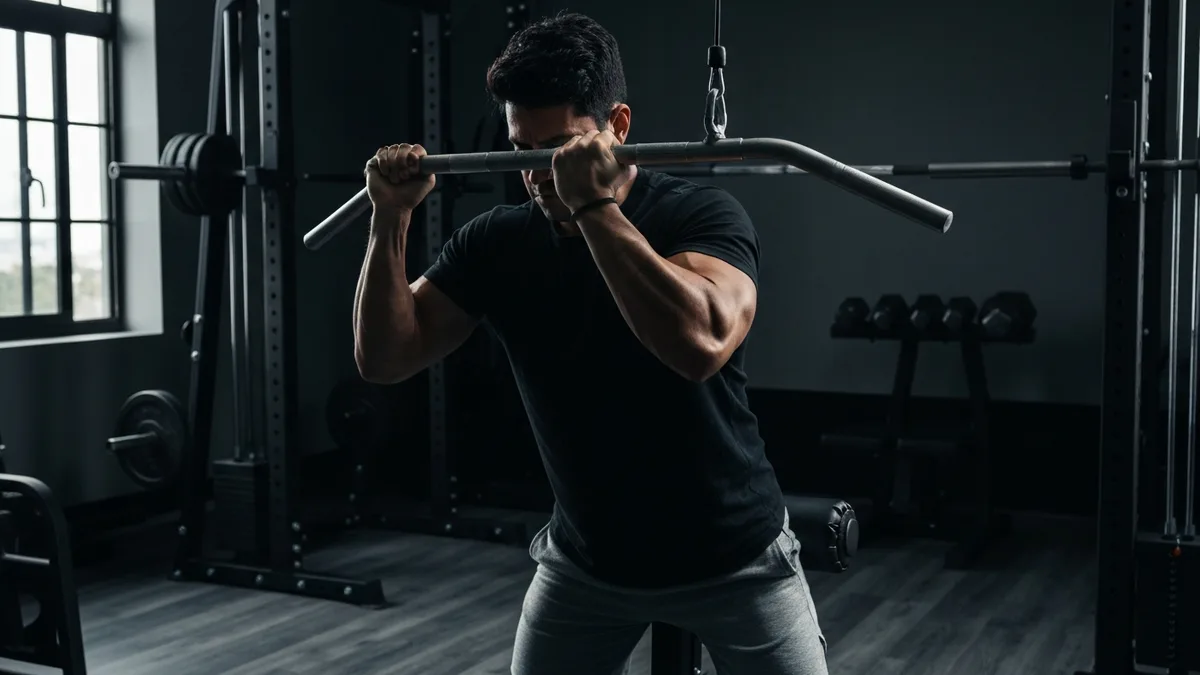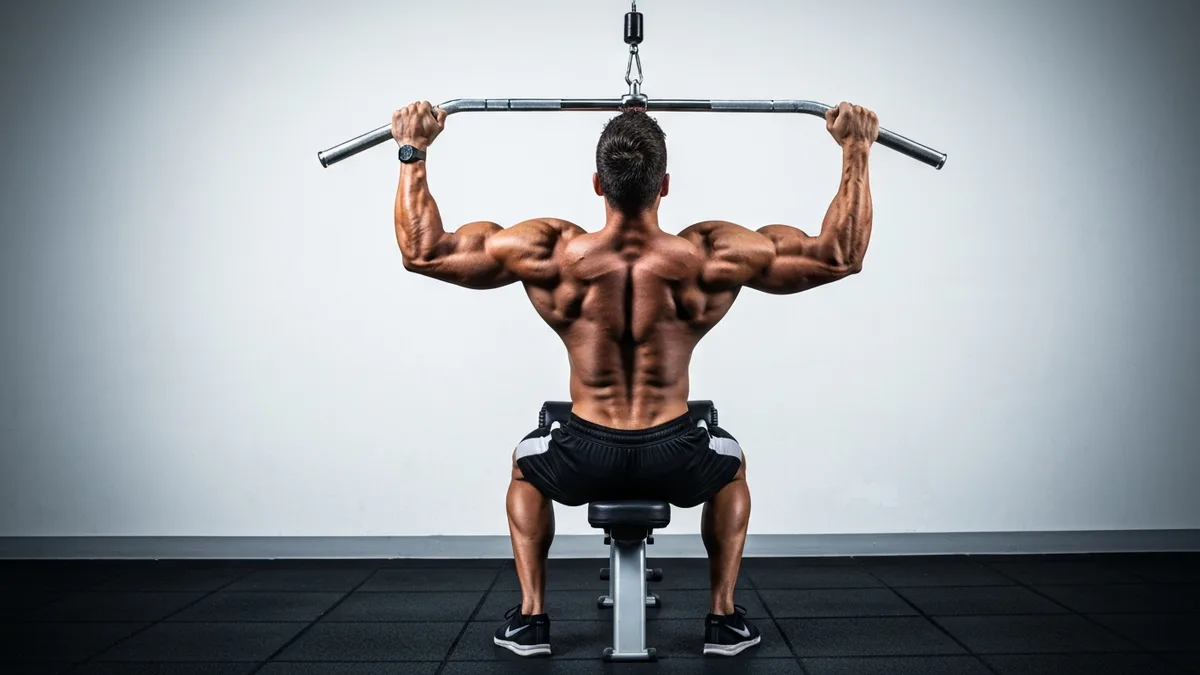
The main types of lat pulldown bars are the standard wide lat bar (most versatile), V-handle (close neutral grip for lower lats), straight bar (straight-arm pulldowns), EZ-curl bar (reduced wrist strain), MAG grip handles (angled neutral positions), and single-handle D-grip (unilateral work). Each changes the grip width, wrist angle, and range of motion, shifting which portion of the lats and upper back bears the primary training load.
Standard Wide Lat Bar
The default pulldown attachment — a 38-48 inch curved or straight bar with downturned ends. It accommodates three grip widths on a single bar: wide (hands near the ends), shoulder-width (hands at the bends), and narrow (hands near center).
Best for: General lat development, wide-grip pulldowns that maximize lat stretch, and as the primary pulldown attachment in any gym. The downturned ends allow a comfortable wrist position at wide grips.
Muscle emphasis: Wide grip targets the upper and outer lat fibers through maximum shoulder adduction range. Shoulder-width grip distributes the load more evenly across the full lat. Narrow grip shifts emphasis toward the lower lats and increases biceps contribution.
Worth buying? Essential — this is the foundation attachment. If your pulldown machine includes one, verify it is at least 38 inches wide and has a comfortable grip diameter (28-30mm is standard).
V-Handle (Close Neutral Grip)
A small triangular or V-shaped attachment with two parallel handles approximately 6-8 inches apart. Provides a close neutral grip (palms facing each other).
Best for: Close-grip pulldowns and seated cable rows. The neutral grip reduces wrist and elbow strain compared to pronated grips, making it ideal for lifters with wrist discomfort during wide-bar pulldowns.
Muscle emphasis: Lower lat fibers (due to the narrow grip and shoulder extension path), teres major, and increased biceps involvement. The neutral grip allows slightly heavier loading because the biceps contribute more effectively in this position.
Worth buying? Yes — the second most useful attachment after the wide bar. Doubles as the primary cable row handle and provides a distinct training stimulus from the wide bar.
Straight Bar
A short (20-24 inch) straight bar. Used primarily for straight-arm pulldowns (the only cable exercise that isolates the lats without biceps involvement) and as a triceps pressdown bar.
Best for: Straight-arm pulldowns, which train lat shoulder extension in isolation. The movement starts with arms extended at shoulder height and finishes with the bar at the thighs — the lats produce the entire movement with no elbow flexion.
Muscle emphasis: Pure lat isolation during straight-arm pulldowns. Also useful for overhand pulldowns at shoulder-width grip.
Worth buying? Yes, if you want lat isolation work or need a triceps pressdown bar. Low cost ($15-30) and high utility across multiple exercises.
MAG Grip Handles
Angled handles that position the wrists between full pronation and full supination. Available in wide, medium, and narrow widths. The angled grip reduces the wrist torque that straight bars impose during heavy pulldowns.
Best for: Lifters who experience wrist or elbow discomfort with standard bars, and those who want to load pulldowns heavier than pronated grips allow. The semi-supinated position lets the biceps contribute more effectively, typically adding 10-15% to pulldown strength compared to a wide overhand grip.
Muscle emphasis: Similar to a neutral-grip pulldown but with slightly more lat stretch due to the wider hand position. The wide MAG grip provides an excellent compromise between the lat stretch of a wide bar and the joint comfort of a neutral grip.
Worth buying? Worth considering if you train pulldowns heavy and frequently. Higher cost ($40-80) but excellent ergonomics and durability.
Single D-Handle
A single stirrup-style handle used for unilateral (one-arm) pulldowns and rows. Allows each side to work independently, addressing strength imbalances between left and right.
Best for: Single-arm pulldowns, single-arm cable rows, and any movement where you want to train each side independently. Particularly useful for lifters who notice one lat is stronger or more developed than the other.
Muscle emphasis: Identical to bilateral pulldowns but allows greater range of motion per side (the working arm can cross the midline slightly, increasing peak lat contraction). Also increases core anti-rotation demand during single-arm work.
Worth buying? Yes — inexpensive ($10-20), versatile, and addresses the bilateral strength gaps that standard bars cannot correct.
Wide Neutral-Grip Bar
A wide bar (30-40 inches) with parallel vertical handles at various widths. Combines the wide hand spacing of a lat bar with the neutral (palms-in) grip of a V-handle.
Best for: Lifters who want the lat stretch of a wide grip without the wrist strain of a pronated grip. Provides the best of both worlds — wide hand spacing for maximum lat recruitment with neutral wrist positioning for joint comfort.
Muscle emphasis: Full lat activation comparable to a wide overhand bar, but with increased biceps contribution from the neutral grip. The rhomboids and mid-traps may also contribute more because the neutral grip encourages a greater scapular retraction at the bottom.
Worth buying? A strong upgrade if you find the wide lat bar uncomfortable. Not essential if the standard bar works well for you.
Triceps Rope
While primarily a triceps attachment, the rope has value for back training. Face pulls (pulling the rope toward the face with external rotation at the end) target the rear delts, rhomboids, and rotator cuff — muscles that standard pulldown bars underserve.
Worth buying? Yes — face pulls are one of the most important shoulder health exercises, and the rope is the best attachment for them. Low cost ($10-20).
Recommended Starter Set
If you are equipping a home pulldown machine from scratch, these three attachments cover the widest range of exercises for the lowest cost:
| Attachment | Primary Use | Approx. Cost |
|---|---|---|
| Wide lat bar | All pulldown grips | $30-60 |
| V-handle | Close-grip pulldowns + rows | $15-30 |
| Straight bar + rope | Straight-arm pulldowns, face pulls, triceps | $20-40 |
Total: $65-130 for attachments that cover every pulling pattern the machine can perform. For how each attachment changes muscle recruitment during rows specifically, see our cable row attachments guide. For the exercises themselves, our pulldown form guide and cable row guide cover technique for every variation.