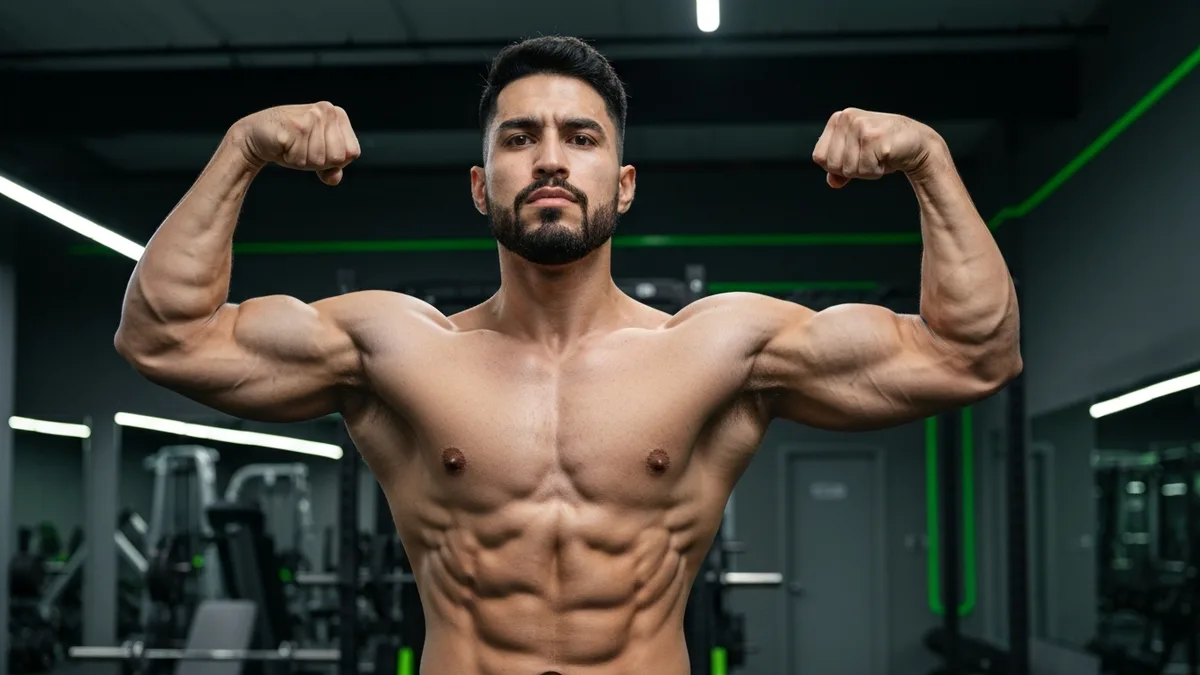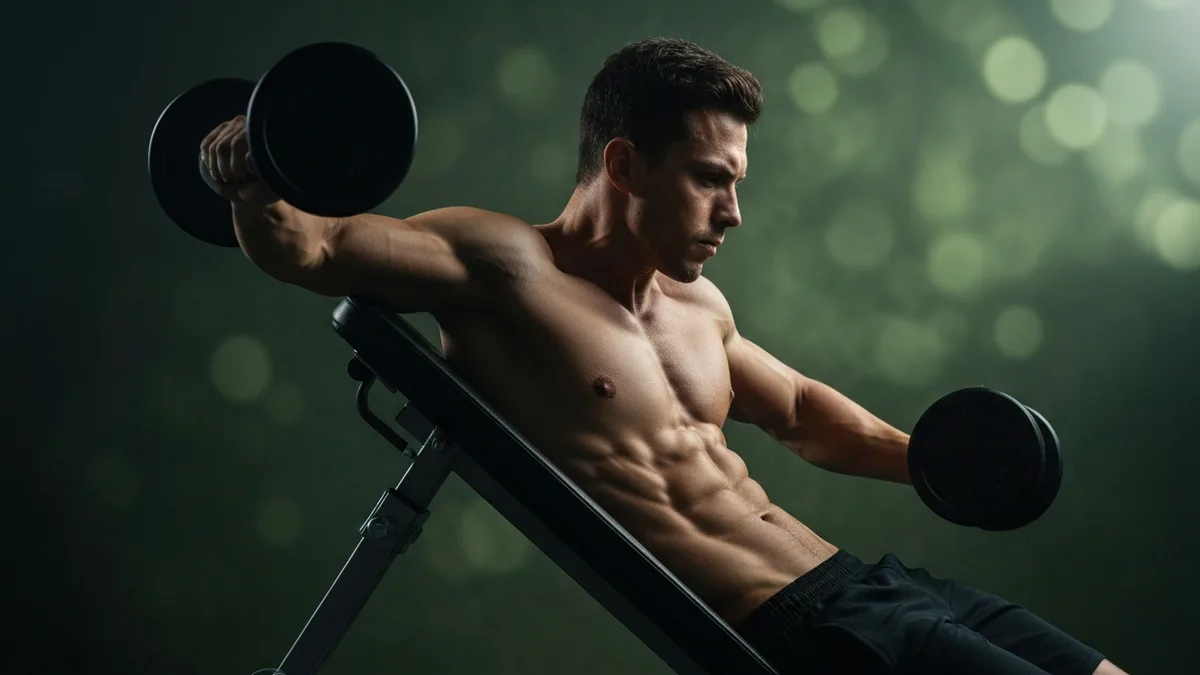
The reverse fly works the rear deltoid as the primary mover, with significant contribution from the middle trapezius and rhomboids at peak contraction. Secondary muscles include the infraspinatus and teres minor (rotator cuff external rotators) and the lower trapezius. Together, these muscles form the posterior shoulder and upper back complex responsible for scapular retraction, shoulder stability, and upright posture.
Why Reverse Flies Matter
The muscles targeted by the reverse fly are the most commonly undertrained in the average lifter. Bench pressing, push-ups, and front raises develop the anterior shoulder and chest. Without proportional posterior work, the shoulder girdle pulls forward into protraction — the rounded-shoulder posture that leads to trapezius tension, rhomboid pain, and shoulder impingement.
Reverse flies address this imbalance directly. They are the simplest isolation exercise for the rear delt and mid-back retractors, requiring no complex technique and minimal equipment. A pair of light dumbbells is enough.
From a shoulder health perspective, the external rotation component of the reverse fly strengthens the infraspinatus and teres minor — two rotator cuff muscles that protect the shoulder joint during pressing movements. Lifters who include regular reverse fly work report fewer shoulder issues during bench pressing and overhead work.
How to Perform the Reverse Fly
Dumbbell Bent-Over Reverse Fly
Stand with feet hip-width apart. Hinge forward at the hips until your torso is roughly 45-60 degrees from vertical. Let the dumbbells hang at arm's length below the chest, palms facing each other.
Raise the dumbbells outward in a wide arc, leading with the elbows rather than the hands. Think about pushing the elbows toward the ceiling rather than pulling the dumbbells upward — this cue keeps the rear delt as the driver instead of the upper trap.
Lift until the upper arms are roughly parallel to the floor. Squeeze the shoulder blades together at the top for a one-count. Lower under control over 2-3 seconds. Avoid letting the dumbbells swing back down — the eccentric phase is where a significant portion of the muscle stimulus occurs.
Incline Bench Reverse Fly
Lie face-down on an incline bench set to 30-45 degrees. This removes the hip-hinge stabilization demand, allowing you to focus entirely on the rear delt and upper back muscles without your lower back being involved. For anyone with lower back sensitivity, this is the preferred variation.
The bench also eliminates momentum — you cannot swing the weights when your torso is pinned against a pad. This forces strict form and is the variation most likely to produce genuine rear delt and mid-trap activation rather than compensatory upper trap shrugging.
Cable Reverse Fly
Stand between two cable columns set at shoulder height. Cross-grip the handles (left hand grabs right cable, right hand grabs left cable). Step back to create tension, then open the arms outward in a wide arc.
The cable variation provides constant tension throughout the range — unlike dumbbells, where resistance drops as the arms approach the bottom position. This makes cables superior for time under tension and sustained muscle activation, particularly for higher-rep corrective work.
Machine Reverse Fly (Pec Deck)
Most pec deck machines have a reverse fly setting. Sit facing the pad, grip the handles with palms facing inward, and open the arms against the machine's resistance. The fixed path removes stability demands entirely, making this the easiest variation to load progressively.
Machine reverse flies are useful for pushing closer to failure without form breakdown — the guided path prevents the compensatory patterns (shrugging, swinging, using momentum) that creep in during free-weight sets near fatigue.
Muscles Worked in Detail
| Muscle | Role | When It Works Hardest |
|---|---|---|
| Rear deltoid | Shoulder horizontal abduction | Throughout the full arc, peak at arm-parallel |
| Middle trapezius | Scapular retraction | Final 20% of range, at full squeeze |
| Rhomboids | Scapular retraction assist | At peak contraction alongside mid-traps |
| Infraspinatus | External rotation | When wrists rotate thumbs-up at the top |
| Teres minor | External rotation assist | Throughout, as a shoulder stabilizer |
| Lower trapezius | Scapular depression | Maintaining depressed shoulders during the lift |
The distinction between the first two-thirds and the final third of the range matters. Through most of the arc, the rear delt handles the horizontal abduction. But at peak contraction — when the arms are wide and the shoulder blades are pulled together — the rhomboids and mid-traps take over as the primary force producers. This is why the squeeze at the top is the most valuable part of each rep. Cutting the range short eliminates the portion where the upper back muscles contribute most.
Common Mistakes
Too heavy. The rear delt is a small muscle. Ego-loading reverse flies leads to upper trap compensation, momentum, and reduced range of motion. Use weights that allow 12-20 controlled reps with a full squeeze at the top.
Shrugging. Hiking the shoulders toward the ears during the lift shifts the work from the rear delts and mid-traps to the upper traps. Keep the shoulders depressed throughout — the cue "long neck" helps maintain this position.
Elbows too high. Raising the elbows above shoulder height turns the reverse fly into a modified lateral raise, increasing upper trap and supraspinatus involvement while reducing rear delt activation.
No squeeze at contraction. Letting the dumbbells fall back immediately after reaching the top eliminates the scapular retraction component. Hold the peak position for a full second — this is where the mid-traps and rhomboids engage most intensely.
Programming Reverse Flies
Reverse flies are best used as a high-frequency, low-fatigue movement. The rear delts and mid-back retractors recover quickly and benefit from frequent stimulation.
For hypertrophy: 3 sets of 12-15 reps, 2-3 times per week. Any variation works — rotate between dumbbell, cable, and machine across sessions.
For postural correction: 2-3 sets of 15-20 reps at the end of every upper body session. This builds endurance in the retractors that directly transfers to sustained upright posture. Band pull-aparts can substitute when equipment is limited.
For shoulder health: 2 sets of 15-20 reps as part of your warm-up before pressing sessions. The external rotation component primes the rotator cuff for bench press and overhead pressing loads.
Reverse flies pair naturally with cable rows and face pulls in an upper back training block. For complete session design, see how many back exercises per workout. For a full program structure, our back and bicep workout guide includes reverse flies as a standard finishing movement.