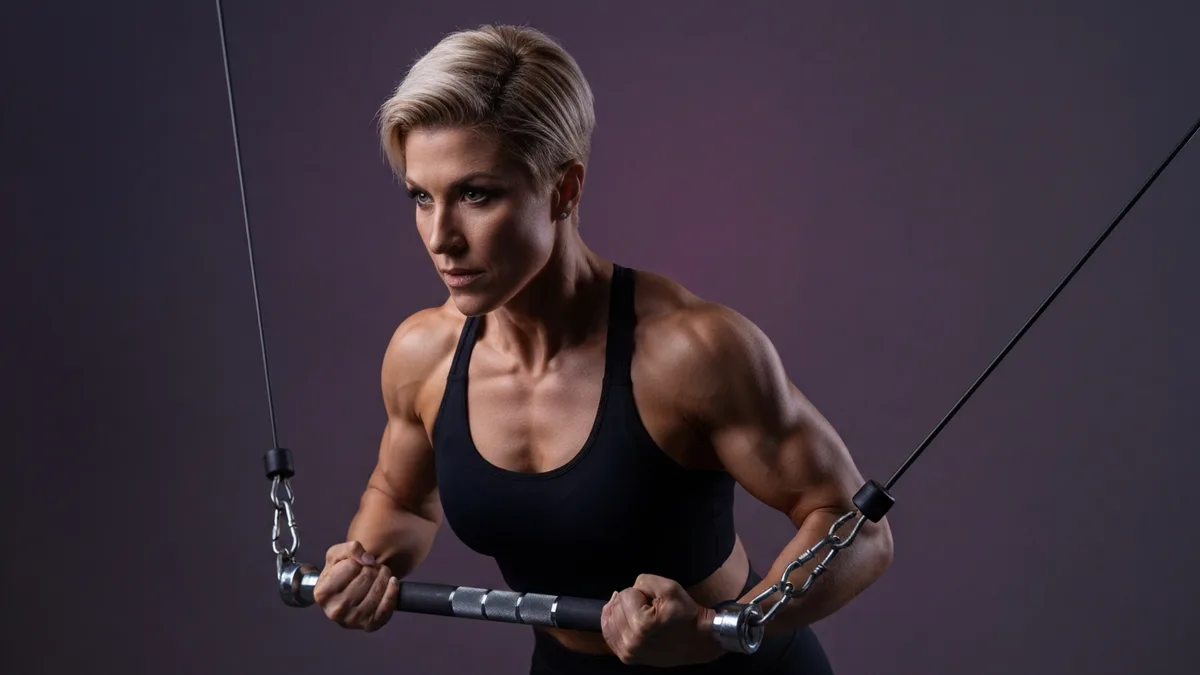
A back and bicep workout should lead with compound back exercises (rows, pulldowns, or pull-ups) before progressing to isolation work, with direct biceps exercises at the end. The session typically includes 3-4 back exercises (9-12 sets) covering both vertical and horizontal pulling patterns, followed by 1-2 biceps exercises (3-6 sets). This structure takes advantage of the biceps’ involvement in pulling movements without pre-fatiguing them before compound lifts.
Why Back and Biceps Work Together
The biceps function as synergists in every pulling movement. During lat pulldowns, cable rows, barbell rows, and pull-ups, the biceps flex the elbow to complete the pulling action. By the time you finish 9-12 sets of back work, the biceps have already received significant indirect training volume.
Pairing them in the same session means the biceps are already warmed up and partially fatigued from back work, so 2-4 sets of direct biceps isolation are sufficient to reach their growth threshold. This is far more efficient than training biceps on a separate day, where they need their own warm-up and often receive redundant volume.
Exercise Order
The order within a back and biceps session follows a clear priority structure:
1. Heavy compound pull (if included): Deadlifts or heavy barbell rows go first when they are fresh and your spinal stabilizers are not fatigued. Not every back session needs a heavy compound — this slot is optional.
2. Vertical pull: Lat pulldown or pull-ups. This targets the lats through shoulder adduction — the movement pattern that contributes most to back width.
3. Horizontal pull: Cable rows, barbell rows, or machine rows. This targets the rhomboids and mid-traps through scapular retraction — the movement pattern that contributes most to back thickness.
4. Isolation / rear delt work: Reverse flies, face pulls, or straight-arm pulldowns. These address the muscles that compound pulls underserve.
5. Biceps isolation: Curls (barbell, dumbbell, cable) to directly target the biceps beyond the indirect volume from pulling.
Beginner Program (3-4 Months Training)
| Exercise | Sets x Reps | Rest |
|---|---|---|
| Lat pulldown (wide grip) | 3 x 10-12 | 90 sec |
| Seated cable row (V-handle) | 3 x 10-12 | 90 sec |
| Face pull (rope) | 2 x 15-20 | 60 sec |
| Dumbbell curl | 2 x 10-12 | 60 sec |
Total: 10 sets (8 back + 2 biceps). Simple, covers both pulling planes, and provides enough direct biceps work for beginners. This session should take 35-45 minutes.
Intermediate Program (6+ Months Training)
| Exercise | Sets x Reps | Rest |
|---|---|---|
| Barbell row | 4 x 6-8 | 2 min |
| Lat pulldown (close neutral grip) | 3 x 10-12 | 90 sec |
| Cable row (wide overhand) | 3 x 10-12 | 90 sec |
| Reverse fly | 3 x 15-20 | 60 sec |
| Barbell curl | 3 x 8-10 | 60 sec |
| Hammer curl | 2 x 10-12 | 60 sec |
Total: 18 sets (13 back + 5 biceps). Notice the back exercises use different grips and pulling angles to cover the full back musculature. The barbell row provides heavy compound loading; the pulldown targets the lats specifically; the wide-grip cable row hits the retractors; and the reverse fly isolates the rear delts.
Advanced Program (2+ Years Training)
| Exercise | Sets x Reps | Rest |
|---|---|---|
| Deadlift (conventional or RDL) | 3 x 5 | 3 min |
| Weighted pull-ups | 4 x 6-8 | 2 min |
| Cable row (V-handle, pause at peak) | 3 x 10-12 | 90 sec |
| Straight-arm pulldown | 3 x 12-15 | 60 sec |
| Face pull | 3 x 15-20 | 60 sec |
| Incline dumbbell curl | 3 x 10-12 | 60 sec |
Total: 19 sets (16 back + 3 biceps). The advanced lifter needs more back volume but not proportionally more biceps volume — the biceps are already receiving substantial indirect work from 16 sets of pulling. Three direct sets at the end with a stretch-emphasized variation (incline curls) provide the targeted stimulus needed without overtraining.
Volume Guidelines
For weekly back volume recommendations across different training frequencies, see our how many back sets per week guide. For choosing the right number of exercises within a single session, our how many back exercises per workout guide covers the decision framework.
The biceps typically need 6-10 direct sets per week for most lifters. If you train back and biceps twice per week, 3-5 direct biceps sets per session covers this range. Remember that every back pulling set also trains the biceps indirectly — 12-16 weekly pulling sets provide significant additional biceps stimulus beyond the direct sets.
Common Mistakes
Too many biceps exercises. Three or four biceps exercises in a session where the biceps already worked through 10+ pulling sets is redundant. The biceps are a small muscle group with limited recovery capacity — 2-3 sets of focused direct work after back training is sufficient for nearly all lifters.
Skipping the vertical or horizontal pull. Both pulling planes are needed for complete upper back development. A session with only pulldowns and curls neglects the retractors. A session with only rows neglects the lats. Include at least one exercise from each plane.
Using the same grip on every exercise. If you do wide-grip pulldowns, wide-grip rows, and wide-grip face pulls, the rhomboids are overtrained while the lower lats are undertrained. Vary the grip across exercises — see our seated row vs lat pulldown comparison for how grip changes shift the stimulus.