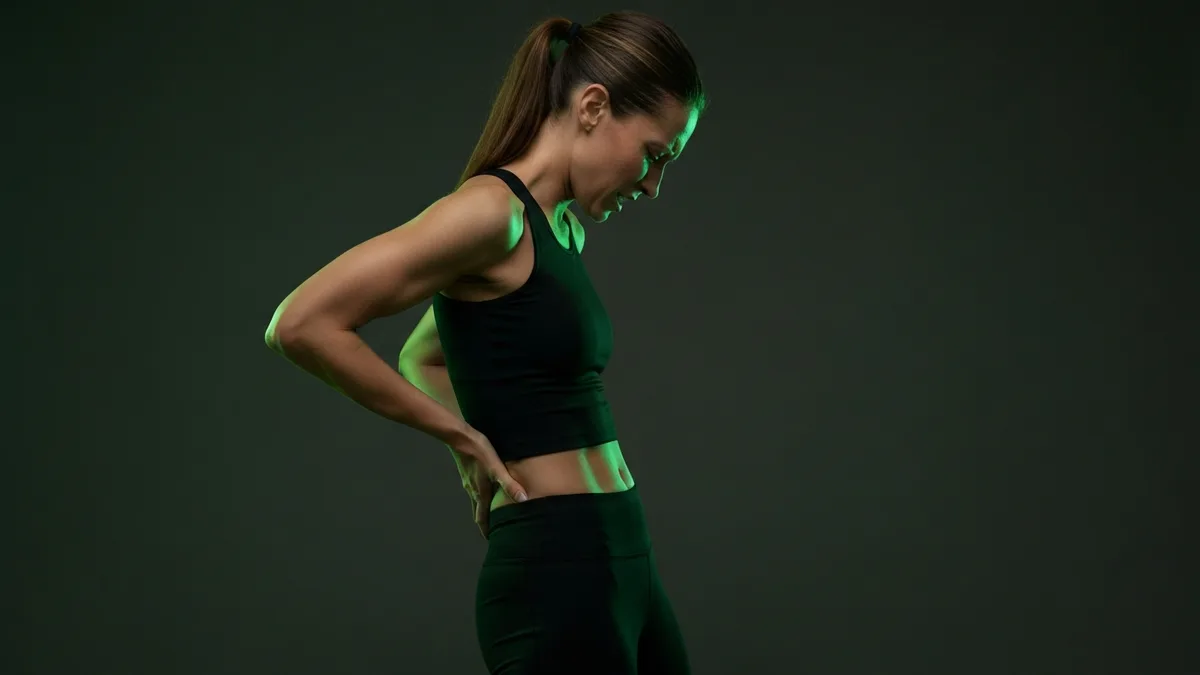
Tight glutes contribute to lower back pain by restricting hip mobility. When the hips cannot flex, extend, or rotate fully, the lumbar spine compensates by exceeding its comfortable movement range — producing excessive load on the discs, erectors, and facet joints. Addressing the connection requires releasing glute tightness through foam rolling and stretching, restoring hip mobility, and strengthening both the glutes and lumbar stabilizers to prevent compensatory patterns from recurring.
The Biomechanical Connection
The pelvis is the structural bridge between the lumbar spine and the hips. It does not exist in isolation — what happens at the hip directly affects what the lumbar spine must do, and vice versa. This is the lumbopelvic rhythm: every bending, twisting, and reaching movement involves coordinated motion at both the hip and the lumbar spine.
In a system with normal hip mobility, bending forward to pick something up involves roughly 60-70% hip flexion and 30-40% lumbar flexion. The hips do most of the work while the lumbar spine contributes a modest amount of motion within its comfortable range.
When the glutes are tight (particularly the gluteus maximus and piriformis), hip flexion is restricted. The same bending movement now requires the lumbar spine to contribute 50-60% of the motion rather than 30-40%. This extra lumbar flexion loads the discs and erector spinae beyond their ideal operating range — and over hundreds of repetitions throughout the day, produces cumulative strain that manifests as lower back pain.
How the Glutes Become Tight
Prolonged sitting. The gluteus maximus is held in a shortened and compressed position while seated. The hip flexors on the opposite side of the joint shorten simultaneously, creating a reciprocal tension pattern that restricts hip extension when you stand. Hours of daily sitting accumulate into a significant mobility deficit over months and years.
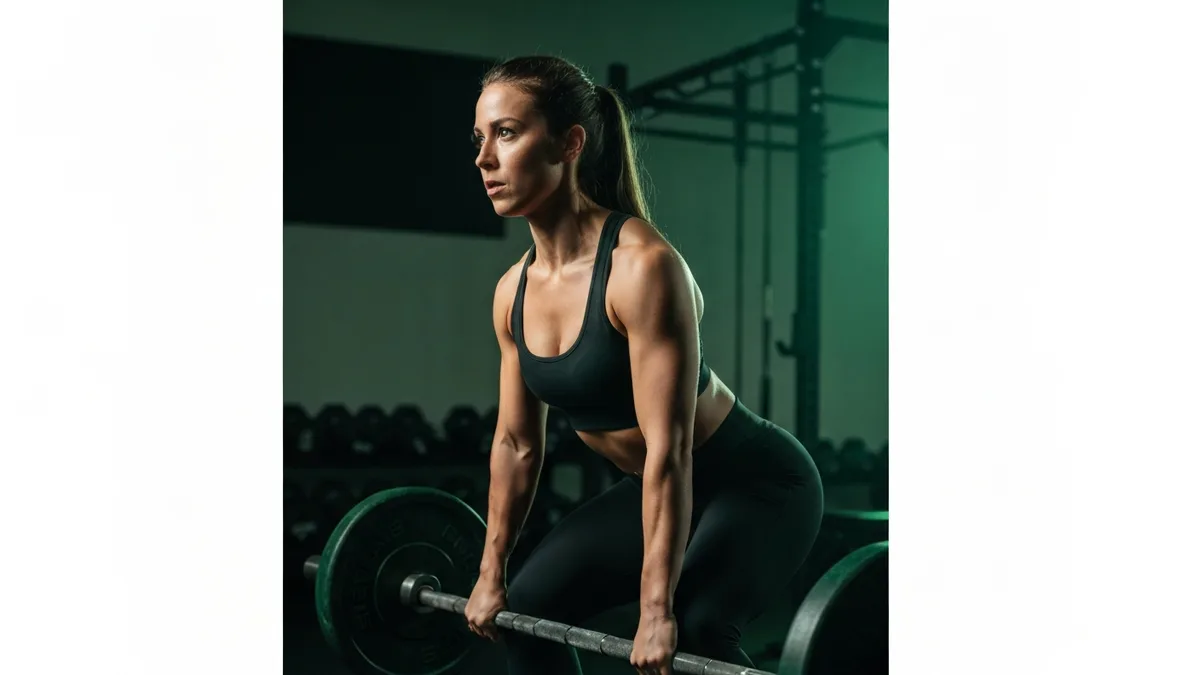
Training without mobility work. Heavy deadlifts, squats, and barbell rows load the glutes concentrically and eccentrically. Without post-training stretching and mobility work, the muscles adapt to a shortened resting length, progressively tightening over training cycles.
Overactive compensation. Weak or inhibited glutes sometimes paradoxically present as tight because the muscle is overworking to compensate for other deficits. A weak gluteus medius may spasm and tighten as it attempts to stabilize the pelvis during single-leg activities like walking and running.
Identifying the Pattern
The glute-driven lower back pain pattern has several identifying features:
Pain worsens with prolonged sitting, then standing. The glutes tighten during sitting, and the first few steps after standing require the lumbar spine to compensate for the restricted hips. This "transition pain" that eases after walking for a few minutes is characteristic.
Pain during forward bending, especially morning bends. Reaching for shoes, bending to the sink, or picking objects off the floor produces lumbar pain because the tight glutes limit the hip contribution to the movement.
Asymmetric presentation. If one glute is tighter than the other, the pain tends to be unilateral or worse on one side. The lumbar spine rotates toward the tight side to compensate for the hip restriction, loading the facet joints and erectors asymmetrically.
Improvement with glute stretching. If stretching the glutes produces immediate (even temporary) relief in the lower back, the connection is confirmed.
Release and Stretching Protocol
Foam Rolling the Glutes
Sit on a foam roller with one ankle crossed over the opposite knee (figure-four position). Roll slowly across the gluteus maximus on the crossed side, covering the full area from the sacrum to the outer hip. Spend 2-3 minutes per side, pausing on tender areas for 20-30 seconds.
For the gluteus medius (outer hip), shift the roller to the lateral hip between the hip bone and the greater trochanter. Roll slowly through this area, which is often surprisingly tender.
Targeted Stretches
Figure-four stretch: Lying on the back, cross one ankle over the opposite knee and pull the bottom knee toward the chest. Hold 30-60 seconds per side. This targets the piriformis and deep external rotators that are the primary hip rotation restrictors.
Pigeon pose: From a hands-and-knees position, bring one knee forward with the shin angled across the body. Lower the hips toward the floor. Hold 30-60 seconds per side. Targets the gluteus maximus and piriformis simultaneously.
90-90 hip stretch: Sit with both legs bent at 90 degrees — one in front (externally rotated) and one to the side (internally rotated). Lean the torso forward over the front shin. Hold 30-60 seconds per side. This addresses both internal and external rotation limitations.
Strengthening for Long-Term Resolution
Stretching restores range; strengthening ensures the new range is maintained and loaded safely.
Glute bridges: 3 sets of 15-20 reps. Activates the gluteus maximus through hip extension without spinal loading. The single most important exercise for re-establishing glute activation in people with sitting-dominant lifestyles.
Clamshells: 3 sets of 15-20 reps per side with a band above the knees. Targets the gluteus medius, which stabilizes the pelvis during single-leg movements and prevents the lateral pelvic drop that loads the lumbar spine asymmetrically.
Isometric lower back work: The lumbar stabilizers that have been compensating need strengthening too. Bird dogs and side planks build the multifidus and quadratus lumborum endurance that protects the lumbar spine even when some hip restriction remains.
For the broader relationship between lower back muscle strength and pain prevention, see our lower back anatomy guide. For decompression stretches that complement glute release work, our stretching guides provide the full protocol.