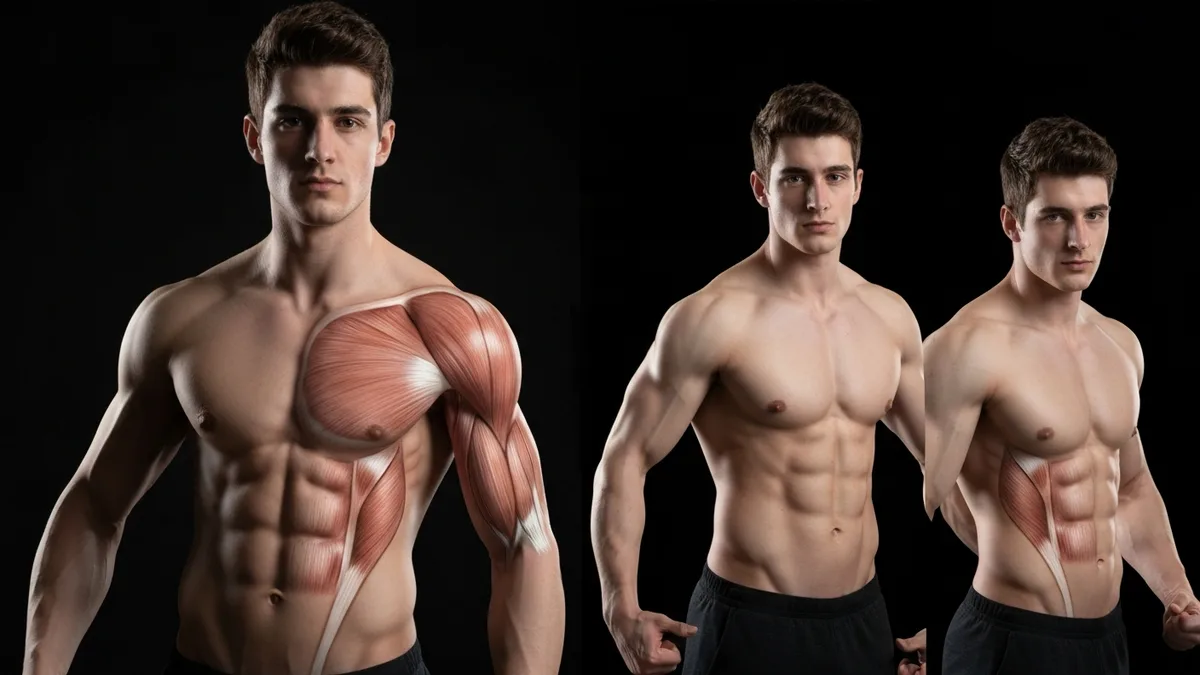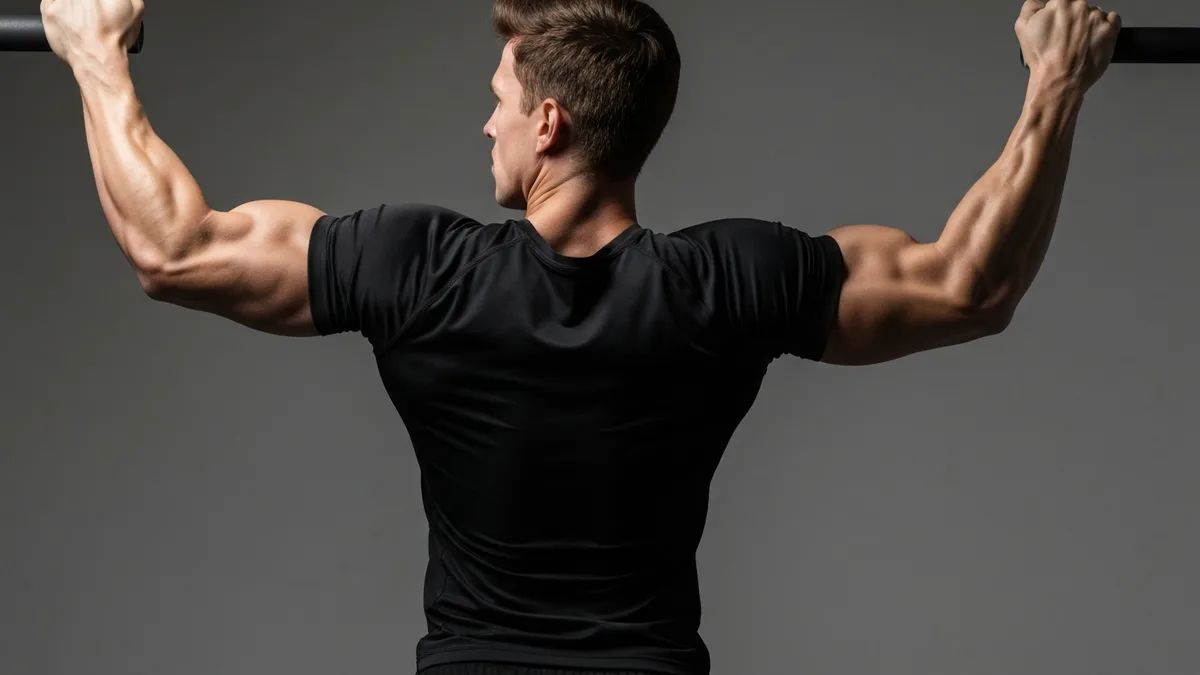
The back contains five functional muscle groups that coordinate during every movement: the lats handle vertical and horizontal pulling, the upper back retractors (traps, rhomboids) control shoulder blade position, the erector spinae extends and stabilizes the spine, the deep stabilizers (multifidus) control segmental vertebral movement, and the quadratus lumborum provides lateral stability. No single exercise trains all of them. A complete back program requires deliberate coverage of each group.
The Five Functional Groups
Group 1: Lats and Teres Major — The Pullers
The latissimus dorsi and teres major are the primary force producers during pulling movements. They perform shoulder extension (pulling down and back) and adduction (pulling toward the body). These are the muscles responsible for the V-taper silhouette and the muscles that generate the most force during pull-ups and lat pulldowns.
The lats are unique among back muscles because they connect the arm directly to the pelvis and spine, making them a bridge between upper and lower body force transfer. During a deadlift, the lats contract isometrically to keep the bar close to the body — a stabilization role that many lifters underappreciate.
Group 2: Upper Back Retractors — The Posture Muscles
The trapezius (middle and lower regions), rhomboids, and rear deltoids control scapular position. They retract, depress, and upwardly rotate the shoulder blades — actions that maintain upright posture, protect the shoulder joint, and provide a stable platform for pressing movements.
This group is the most commonly undertrained in recreational lifters. The consequences show up as rounded shoulders, rhomboid pain, trapezius tension headaches, and shoulder impingement during overhead pressing. Horizontal rows and face pulls are the primary exercises for this group.
Group 3: Spinal Extensors — The Backbone
The erector spinae runs the full length of the spine and produces extension (straightening) while resisting flexion under load. In the lower back, the erectors bear the highest loads during compound lifts. They are the primary target during back extensions and work as stabilizers during deadlifts, rows, and squats.
The erectors are the group most people feel after heavy training — that deep lower back fatigue after a deadlift session is almost entirely erector spinae demand.
Group 4: Deep Stabilizers — The Invisible Foundation
The multifidus, rotatores, and interspinales are small, deep muscles that span 1-4 vertebral segments. They do not produce visible movement or generate significant force. Instead, they provide the segmental control that keeps individual vertebrae aligned during loaded movement.
You cannot feel these muscles working, and you cannot train them with heavy compound lifts. They respond to controlled, low-load exercises like bird dogs and dead bugs. Their atrophy is one of the strongest predictors of recurring lower back pain.
Group 5: Lateral Stabilizers — The Side Guards
The quadratus lumborum and the obliques (which wrap around from the abdomen) stabilize the spine against lateral forces. They are heavily involved during single-leg movements, unilateral carries, and any activity that creates asymmetric loading on the spine.
This group is rarely trained directly by lifters who favor bilateral movements (barbell deadlifts, bilateral rows). Adding side planks, suitcase carries, or single-arm farmer walks addresses this gap.
How They Coordinate During Training
Every back exercise involves multiple groups working simultaneously, but in different roles. Understanding these roles helps you identify which exercises cover which groups — and where your program has gaps.
| Exercise | Prime Mover | Scapular Control | Spinal Stability | Deep Stabilizers |
|---|---|---|---|---|
| Lat pulldown | Lats, teres major | Lower traps (depression) | Low demand | Minimal |
| Barbell row | Lats, rhomboids | Mid traps, rhomboids | High (isometric) | Moderate |
| Cable row | Lats, mid traps | Rhomboids, mid traps | Low to moderate | Low |
| Deadlift | Glutes, hamstrings | Lats (isometric) | Very high (isometric) | Moderate |
| Back extension | Erector spinae | None | High (concentric) | Moderate |
| Reverse fly | Rear delts, mid traps | Rhomboids | Low | Minimal |
| Bird dog | Multifidus | None | Low load, high control | High |
The table reveals an important pattern: no single exercise adequately trains all five groups. Pulldowns miss the spinal extensors and deep stabilizers. Deadlifts miss the scapular retractors. Bird dogs miss the prime movers. A complete program requires exercises from at least three of these categories.
Building a Complete Program
The minimum effective back program covers three movement patterns:
Vertical pull (lats, lower traps, teres major) — lat pulldowns or pull-ups, 3-4 sets, twice per week.
Horizontal pull (lats, rhomboids, mid traps, rear delts) — barbell rows, cable rows, or dumbbell rows, 3-4 sets, twice per week.
Hip hinge (erectors, glutes, hamstrings) — deadlifts or back extensions, 2-3 sets, 1-2 times per week.
Adding face pulls or band pull-aparts for the scapular retractors and bird dogs for the deep stabilizers completes the coverage without adding significant training time.
For detailed programming recommendations, see our guides on how many back exercises per workout, optimal weekly back sets, and our complete back and bicep workout template.
For home gym setups that cover all five groups, our back workout equipment guide breaks down the minimum equipment needed. A pull-up bar, a set of bands, and a back extension bench cover every movement pattern listed above.