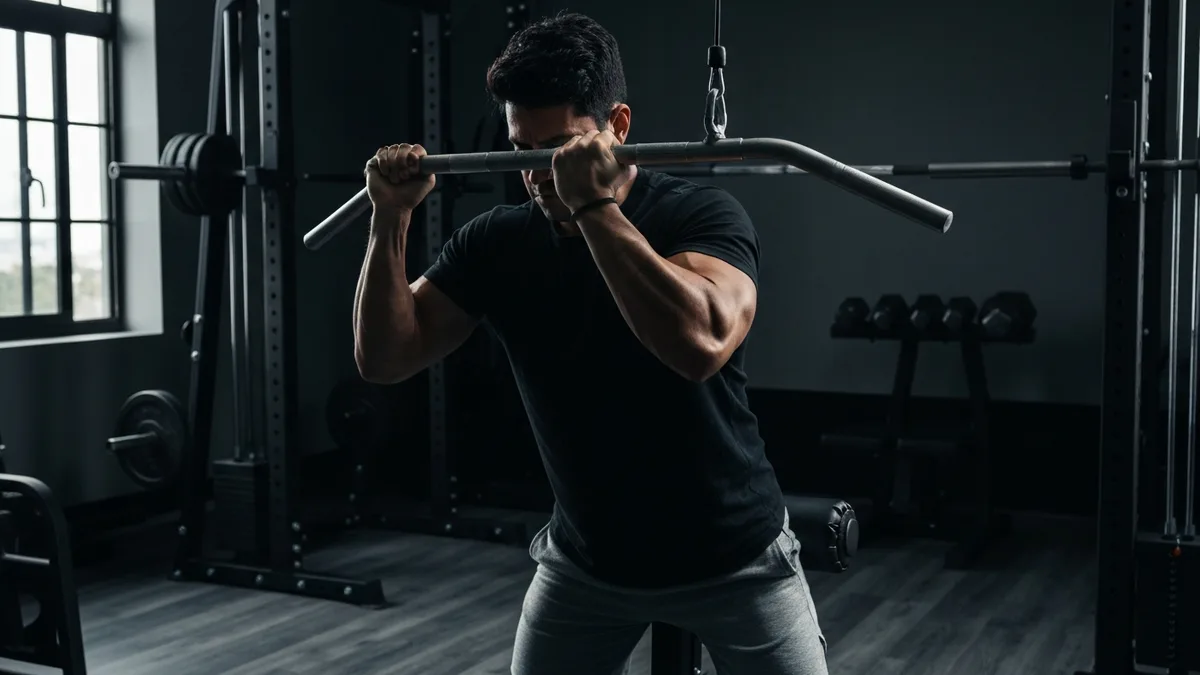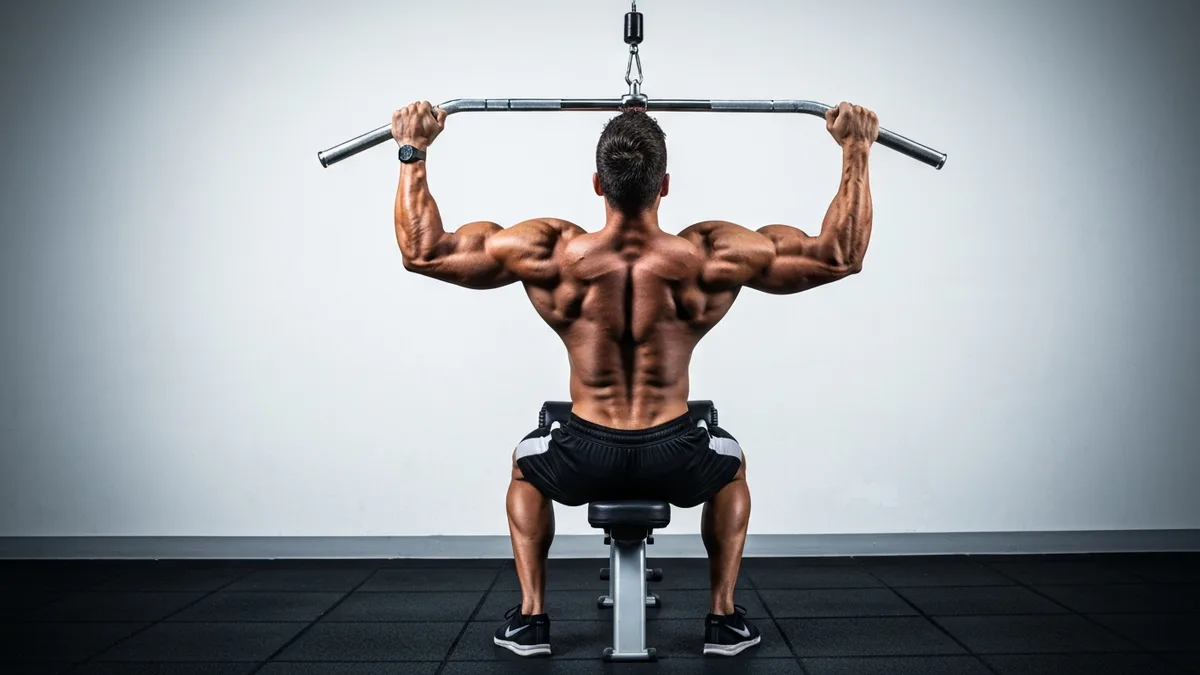
A complete home gym for back training needs equipment for three movement patterns: vertical pulling (pull-ups or lat pulldown), horizontal pulling (rows), and hip-hinge/extension (deadlifts, back extensions). You can cover all three for under $100 with a doorway pull-up bar and resistance bands, or build a professional-grade setup for $500-1500 with a cable station and barbell set.
Essential Equipment (Under $100)
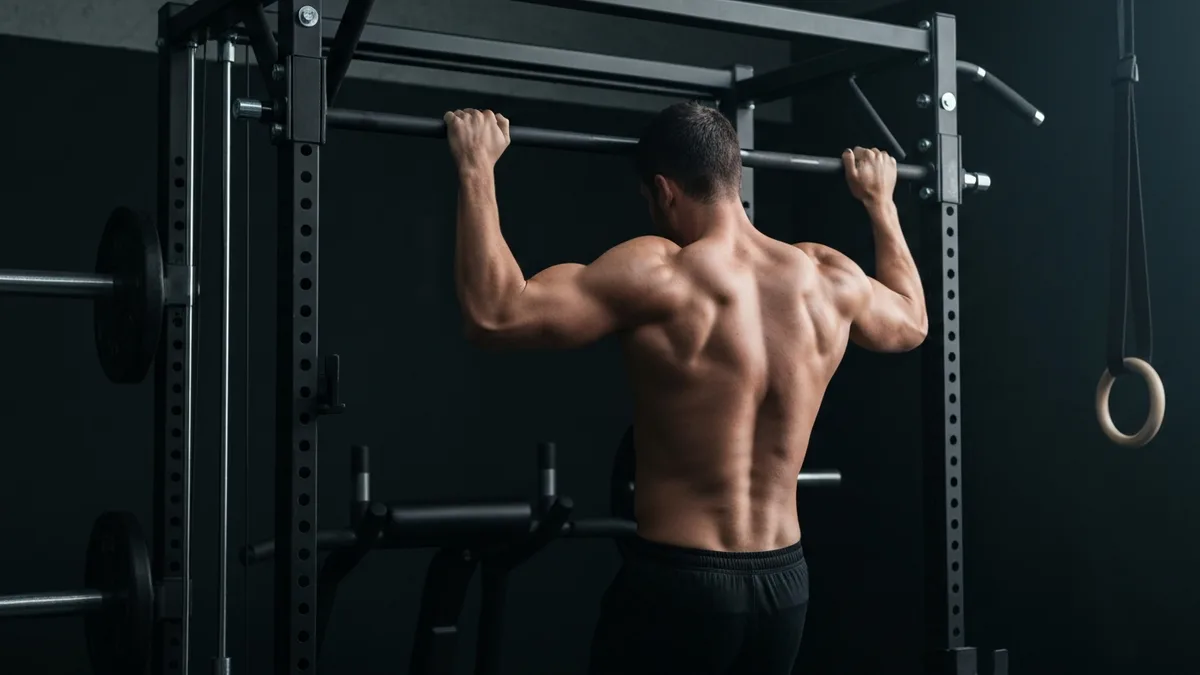
Doorway Pull-Up Bar ($20-40)
The single highest-value piece of back training equipment. A doorway pull-up bar enables the most effective bodyweight back exercise — the pull-up — plus dead hangs for spinal decompression, chin-ups for biceps and lower lats, and hanging knee raises for core work.
Choose a bar that fits your door frame width (most accommodate 24-36 inch frames), has multiple grip positions (wide, narrow, neutral), and uses leverage mounting rather than screw-in mounting if you rent your space.
Resistance Bands ($15-30)
A set of looped resistance bands (light, medium, heavy) enables band-assisted pull-ups, band rows (anchored to a door or sturdy post), face pulls, band pull-aparts, and dozens of other exercises. Bands are the cheapest way to add adjustable resistance to a home setup.
For back training specifically, bands are most valuable for face pulls and pull-aparts — the reverse fly and scapular retraction movements that build the rhomboids and mid-traps. These exercises are difficult to replicate without cables or bands.
Intermediate Setup ($200-500)
Barbell and Weight Plates ($200-400)
A standard or Olympic barbell with 200-300 lbs of plates opens up the most effective back exercises: deadlifts (all variations), barbell rows, good mornings, and barbell lower back exercises. For space-limited setups, a 6-foot barbell works for rows and deadlifts, though a 7-foot Olympic bar is preferred for deadlifts with standard plate spacing.
Kettlebells ($50-150)
One or two kettlebells (16kg and 24kg for most men, 8kg and 16kg for most women) enable kettlebell swings, Turkish get-ups, single-leg deadlifts, and suitcase carries. These movements train reactive spinal stability and asymmetric loading — patterns that barbells and machines cannot replicate.
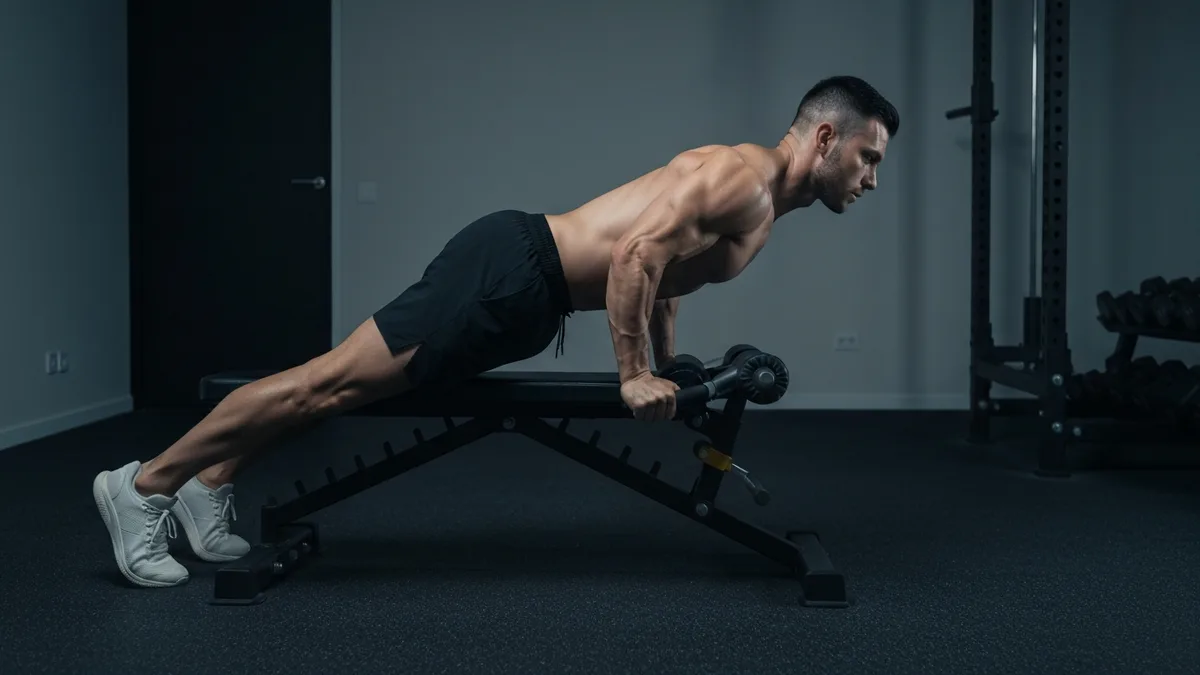
Back Extension Bench ($100-250)
A 45-degree hyperextension bench is the only equipment that trains the erector spinae through a full concentric-eccentric range without loading the spine axially. Back extensions build the erector endurance that prevents back spasms and lifting-related lower back pain.
Advanced Setup ($500-1500)
Lat Pulldown / Cable Station ($200-700)
A dedicated lat pulldown machine with high and low pulleys transforms a home gym from barbell-only to gym-equivalent. It enables pulldowns, cable rows, face pulls, straight-arm pulldowns, and dozens of other cable exercises.
Pair it with 3-4 attachments (wide lat bar, V-handle, straight bar, rope) and you have covered every cable back exercise that a commercial gym offers.
T-Bar Row Attachment ($30-80)
A landmine attachment or T-bar handle that fits on an Olympic barbell. Enables T-bar rows and landmine presses using your existing barbell and plates. Inexpensive addition that provides a distinct rowing angle between barbell rows and cable rows.
Recovery Equipment
Training equipment is not complete without recovery tools. For back-specific recovery:
Foam roller ($15-30): Thoracic spine mobilization, muscle knot release, and general tissue maintenance. Essential for people who sit at desks and train back frequently.
Lacrosse ball ($5-10): Targeted trigger point release for the erectors, lats, and traps. More precise than a foam roller for specific trigger points.
Heating pad ($20-40): For post-training soreness and muscle spasm management. Heat promotes blood flow and relaxes tight musculature.
Complete Setup by Budget
| Budget | Equipment | Exercises Covered |
|---|---|---|
| Under $50 | Pull-up bar + light band | Pull-ups, band rows, band pull-aparts, dead hangs |
| $100-200 | Pull-up bar + band set + foam roller | Above + band face pulls, foam rolling, mobility |
| $300-500 | Above + barbell/plates + kettlebell | Above + deadlifts, barbell rows, swings, get-ups |
| $500-1000 | Above + cable station + back extension bench | Full gym-equivalent back training |
| $1000-1500 | Above + GHD + T-bar attachment + full attachment set | Professional-grade comprehensive setup |
The jump from $50 to $500 covers 90% of what you need. Beyond $500, you are adding convenience and variety, not essential movement patterns. For bodyweight-only back training, the $50 tier is genuinely sufficient for years of progressive training.